
Architects Darlington
The County Durham town of Darlington holds a significant place in global history as the birthplace of steam locomotive passenger railways, following the arrival of George Stephenson’s Locomotion No 1 in 1825. This claim to fame, along with the wider part played by the town in the Industrial Revolution, means that the architecture of Darlington leans heavily toward the Georgian and Victorian eras. Many of the town’s most notable buildings were funded by influential Quaker families, such as the Pease and Backhouse families, in the region.
A remarkable lineage
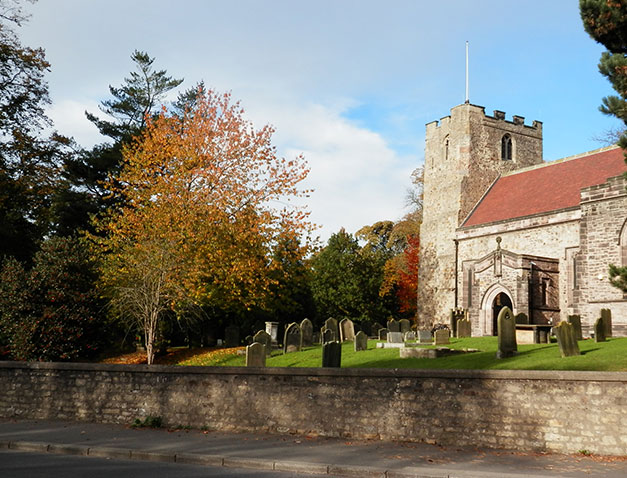
Darlington’s oldest church is the Grade I listed St Andrew’s Church in the ancient village of Haughton-le-Skerne. It dates from 1125 and is of Norman origin, though many believe it to be located on the site of a much earlier Saxon structure. Apart from its impressive age, St Andrew’s Church is notable for its 17th century Cosin woodwork, and windows which represent four distinct architectural periods.
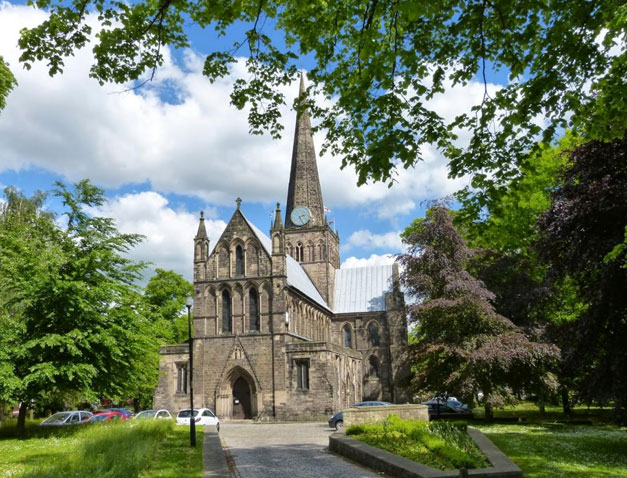
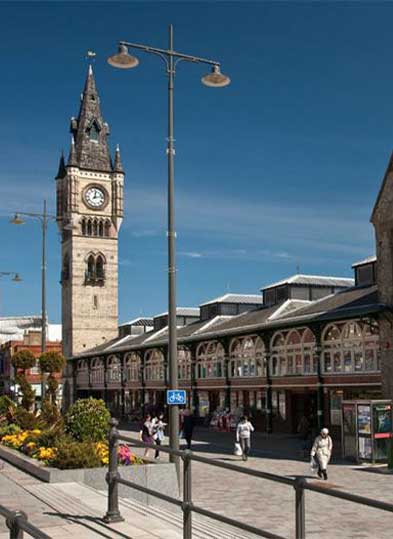
St Andrew’s Church is closely followed by the Grade I listed St Cuthbert’s Church, which is more centrally located in Darlington, and dates back to 1183. This church benefitted from a major restoration between 1864 and 1865, by London architect George Gilbert Scott and local architect James Pigott Pritchett. Architects from London later made their further mark on Darlington – most notably with the Victorian Market Hall, designed in 1860 by Alfred Waterhouse, who was also responsible for the Natural History Museum in London. Links to London continue with the town’s most famous landmark – the clock tower. This was funded by Joseph Pease in 1864, and houses tower bells cast by John Warner & Sons, which are the sister bells to Big Ben in Elizabeth Tower at the Houses of Parliament in Westminster.
The work of George Gordon Hoskins
While Darlington is synonymous with major technological advancement during the Industrial Revolution, it is, in architectural terms, synonymous with the work of English architect George Gordon Hawkins. Having studied in London and Paris, Hoskins settled in Darlington in 1864, and steadily became the town’s primary designer.
While his work was not restricted to the Darlington area, he was responsible for The King’s Hotel, the Darlington Free Library, and Queen Elizabeth Sixth Form College (formerly Queen Elizabeth Grammar School) among many others. His contribution to the town was such that his death prompted a period of public solemnity, and his funeral saw him interred in Darlington’s West Cemetery.
The Victorian work of George Gordon Hoskins in Darlington has endured to become some of the most central and functional buildings in this bustling northern town. The King’s Hotel is now a part of the Mercure hotel chain, and was painstakingly restored in 2012 following a particularly damaging fire. Its central, Market Square location has enshrined it on local lore. Its imposing Victorian façade remains, while its interior retains the high ceilings and fixtures associated with the Victorian era.
The Darlington Library was opened in 1885 on Crown Street, after leading Darlington Quaker Edward Pease bequeathed funds for the establishment of a free library in the town. Its creation was made possible by the people of the town voting for the Free Libraries Act of 1850 and, today, this Grade II listed building houses The Lending Library, The Word (a children’s reading area), The Reference Library, and the e-library which provides 32 public computers.



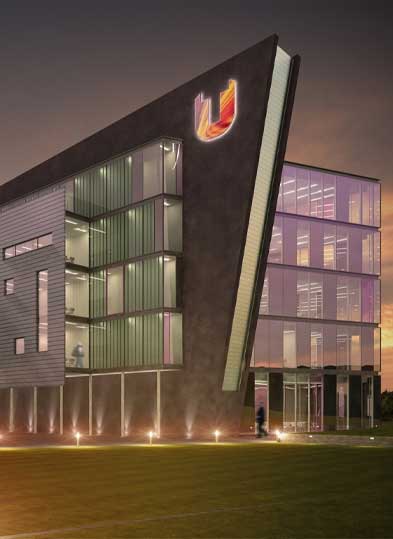

The iconic Queen Elizabeth Sixth Form College began life as Queen Elizabeth Grammar School, after Queen Elizabeth I issued a charter for the establishment of a grammar school in the region. The front section of the building is the Victorian frontage designed by George Gordon Hoskins, and it became a Sixth Form College in 1970, using those facilities. This original building was then repeatedly extended with modern architecture, to create a much larger educational institution, with a capacity of 2000. Today, Queen Elizabeth Sixth Form College ranks among the most highly rated colleges in England, and carefully conserves the work of its architect.
Honouring history with modern takes
As one of the most historically important towns in Northern England, Darlington has demonstrated the unique qualities that can be created by honouring history with more modern takes applied. This is most clearly seen in the work of George Gordon Hoskins, and the way those buildings have been incorporated into modern Darlington life. As a local firm of chartered architects, the Downes Illingsworth Partnership Ltd operates in much the same way – beginning each project with the time honoured, traditional approach of pencil sketch methods, before employing a fully networked CAD system to produce accurate and detailed drawings, along with necessary supporting documentation.
This well-practised methodology results from the three directors having sixty years experience between them, while the company itself has been established for over thirty years.
The company ethos of DIP Ltd is that, “Architecture affects us all, and all are affected differently,” and this is something that particularly resonates with the study of Darlington’s architecture. With the most prominent and well preserved of Darlington’s architectural gems continuing to serve very different purposes for members of the public, it is here that the varied impact of architecture can be surely be seen. With a list of high profile clients - including Bellway, Linden, Barratt Homes, Taylor Wimpey, Yorvik Homes, Broadacres, Redrow Homes, Persimmon, Mulberry Homes in Yorkshire, Harron Homes, and Castlevale Group Ltd – the variety of design achieved by DIP Ltd be seen just as clearly.
But DIP Ltd does not restrict itself to large-scale projects put forth by the construction industry. Instead, this intimate company brings its impressive skill-set to bear upon any type of project dreamed of by clients. Teaming personal attention with flexibility, responsiveness, professionalism, and the ability to adapt, DIP Ltd delivers a comprehensive and thorough service to projects of every conceivable scale, including:
- Initial consultation
- Strategic planning
- Feasibility studies
- Sketch schemes
- Presentation material
- Building surveys
- Planning applications
- Planning appeals
- Building regulations
- Housing services
- Interiors
- Advice and coordination
- Full architectural service
This makes DIP Ltd the first choice for innovative ideas and award-winning designs in the Darlington area.
contact us to discuss your next project
To see how we can help with your development and work together to realise your ambitions,
call us on 01845 524758 or message us using the form below and we will be back in touch.

Sitemap
Our Contact Details
Downes Illingsworth Partnership Limited
56 Market Place
Thirsk
North Yorkshire
YO7 1LW
01845 524758
info@diparchitects.co.uk
Newsletter Sign-up
For all our latest news and project updates join our mailing list below.
 )
)